
BLAKE ELLIS/Local Journalism Initiative
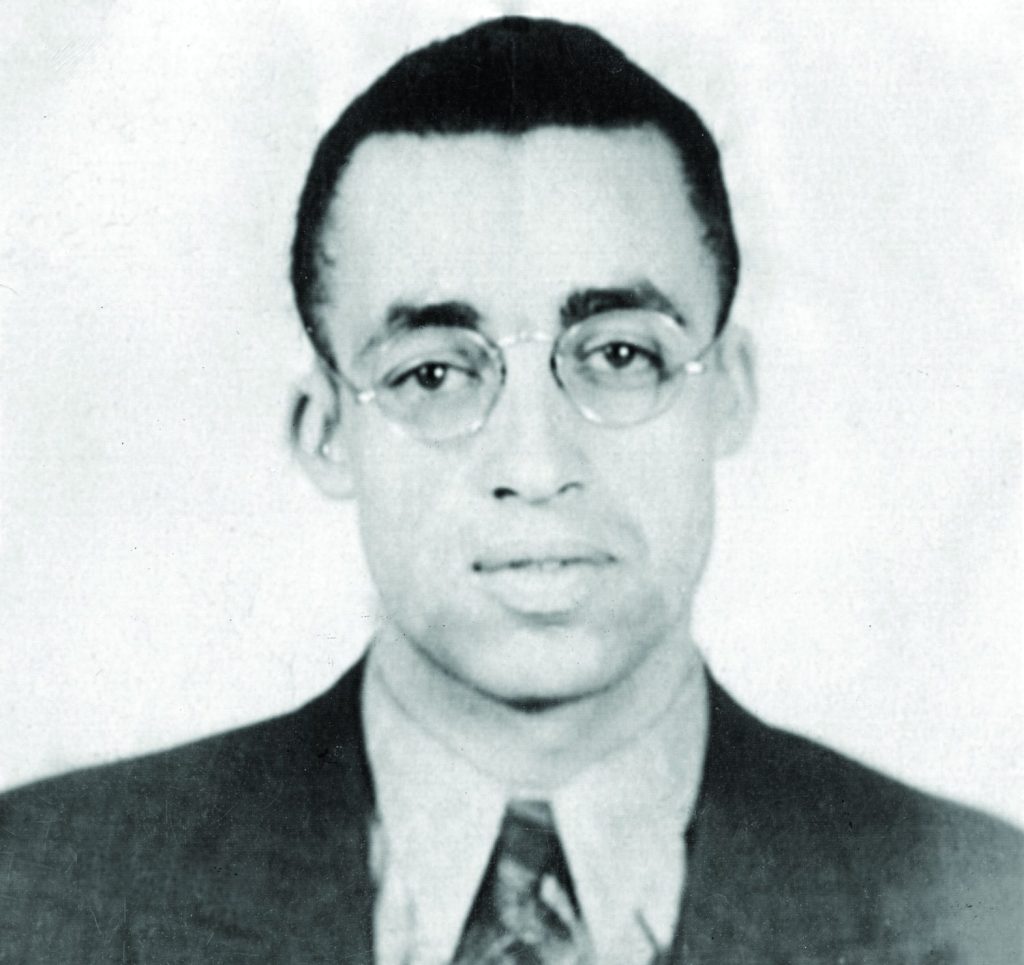
Hugh Burnett – who changed race relations in Ontario – was celebrated Canada Day with his daughter saying the fight for Black rights in Dresden often left her family living in fear.
The Josiah Henson Museum of African Canadian History celebrated the accomplishments of Hugh Burnett and the members of the National Unity Association who fought for the civil rights of Black Ontarians while dealing with racial discrimination within Dresden.
Hugh Burnett grew up in Dresden and went to school in the community. He was living in Windsor in 1943 while serving in the army, when he visited Dresden again. Even though he was wearing his uniform, he was denied service at a restaurant because of the colour of his skin.
He wrote a letter to the Canadian Minister of Justice Louis St. Laurent about his treatment, but the reply he received from the deputy minister was to point out there no laws against racial discrimination. So when Burnett heard his uncles, William, Percy and Bernard Carter were going to form a group to fight against racial discrimination in Dresden he decided to move back to Dresden in 1948.
The founding meeting of the National Unity Association of Chatham, Dresden and North Buxton was held that fall with 30 people in attendance. Percy Carter was the president with Fred Robinson as vice president and Burnett serving as secretary.
Burnett’s daughter, Cheryl Burnett, told a virtual audience on Canada Day that her father was passionate about being an activist with many events in his life strengthening his convictions. At 10, he bought an ice cream in Dresden, she recounted. He was not allowed to enjoy it in the restaurant and had to eat it at home. This put him off, feeling that it was unfair, said Cheryl. Another incident which put a fire in his belly was after he had helped a stranded motorist. The driver took Burnett into Dresden to buy him a Coke but he was not allowed to drink it in the restaurant.
The National Unity Association lobbied the Dresden Town Council force change, with the response being the municipality can’t tell the shop owners how to run their businesses.
The council put it to the people to decide in a referendum in 1949, asking if a bylaw is needed to prevent discrimination in Dresden. There were 625 people who cast votes, with 108 saying yes and 517 voting no, a five to one margin which mirrored the black to white demographic in the community.
This led Maclean’s magazine to declare “Jim Crow lives in Dresden.”
Many didn’t like the bad press for the community and blamed the National Unity Association.
But the publicity of the referendum in Dresden led a group of Toronto reformers to join with the National Unity Association lobbying the Ontario government to do something about racism. Many felt at the time, racism was only something that happened in the United States, and the group used Dresden as an example that racism occurs in this country as well.
This led to the passage of the Fair Employment Practices Act by Ontario Premier Leslie Frost’s government in 1951, followed by the Fair Accommodations Act in 1954 which forbade a person being denied service or housing due to their race, colour or creed.
Still business owners in Dresden were not going to live by these new laws.
When a Black customer wasn’t served, notes were taken and the National Unity Association sent complaints to the ministry of labour. After awhile, the business owners would see these local people coming and instead of serving them would close.
The group brought in people from Toronto who the local business people would not know. Reporters and photographers would accompany them to put further pressure on the local businesses.
It took two years before the Black residents were served in Dresden as Kay’s Café served everyone in 1956.
There were many times Burnett and his family feared for their safety, while the fight for these basic civil rights were going on. Cheryl’s older sister had to be escorted to and from elementary school after threats were made.
Vigilantes approached the Burnett home in Dresden one night with torches. Cheryl said her father came out of the house with a gun, telling the mob “the first person who throws a torch, gets a bullet.” The mob backed down and dispersed.
Cheryl said her father was labelled as trouble in the community and his carpentry business was boycotted in 1956. He resigned his position with the National Unity Association that year and moved his family and his business to London.
“He suffered but everyone else benefited,” said Cheryl.
The National Unity Association met for the last time in 1958 and Burnett passed away in 1991, but he was involved in anti-discrimination efforts for the rest of his life.



 The Herald serving Thamesville, Dresden and Bothwell