Remembering the victims of the Dresden cave in
Heather Wright/The Herald
Freda McCall doesn’t remember much about the day her father and brother died. But she knows they and the four other Dutch immigrants who died Aug. 17, 1957 in the Dresden Cave In didn’t get justice.
McCall was one of the many people at the Dresden Czech Hall Aug. 17, 2024 to mark the day when the men died. The memorial service was set up by Eric Philpott. His father was the engineer on the project. After his death, Philpott found his diaries and read about the horrible workplace accident which claimed the lives of McCall’s brother Wilfred Hovius, 19, and her father, Enne who was 29. Relatives of Dirk Ryksen, 37, Jan Bremer, 43, Jan Oldewening, 45 and Hendrick Drenthe, 49, also listened as Philpott, who is now making a film about the cave in, revealed what some of his research had found.
Philpott said there was a layer of silt material which is porous and can suddenly collapse. Philpott says his father asked for someone to do soil testing. But that never happened.
An expert in workplace health and safety rules says experts at the time would have been able to tell the contractor about the problem, had they been consulted.
Philpott showed a number of photos, including one which showed the partial collapse which happened the day before the men were buried on the work site.
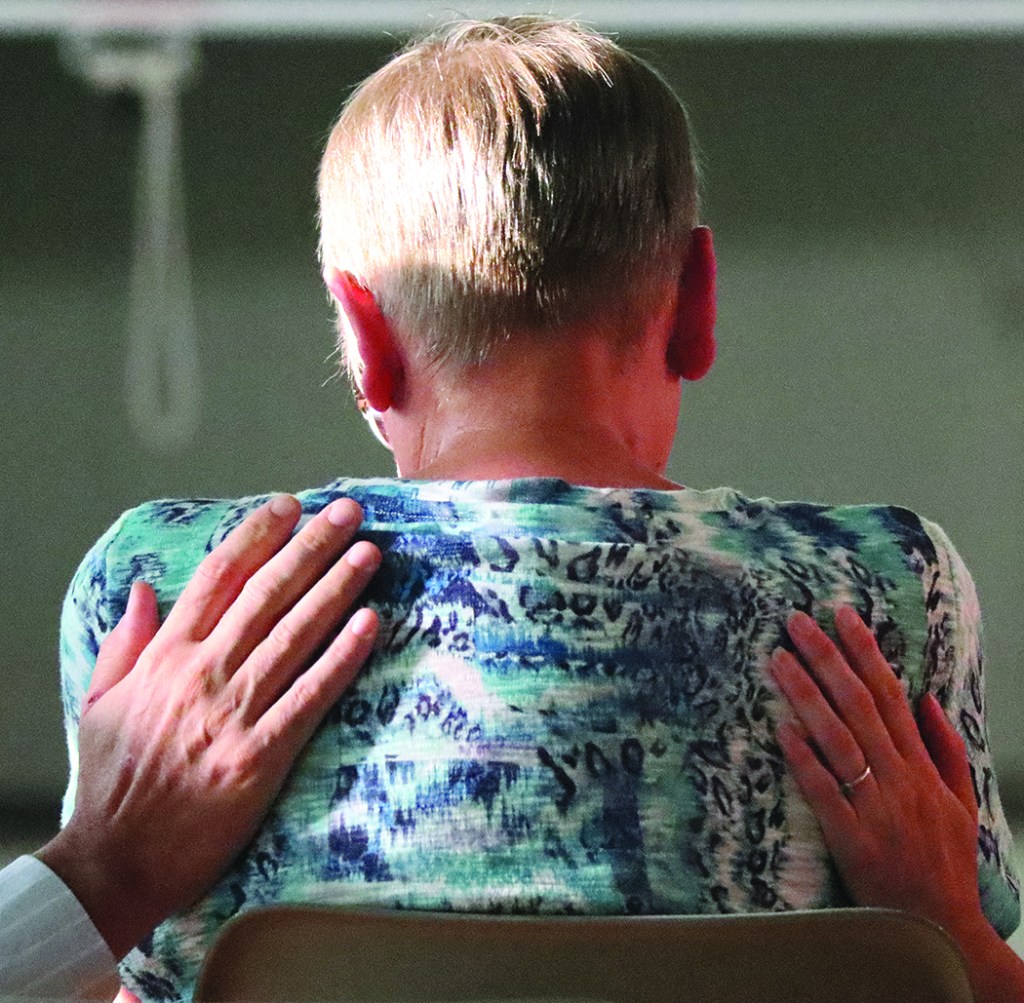
As the family of the men took all this in, McCall lowered her head in sadness. The family around her put a comforting hand on her shoulder.
“I remember my dad telling my mother how big a trench was. They were alone, but I was with them, and he gestured with his arm. I remember,” says McCall who was only three at the time.
Aug. 17, 1957, she remembers her mother calling a friend to take her from their home in Harrietsville, near Aylmer, to Dresden. The older Hovius children gathered around the radio waiting for news of the collapse.
It was about 8 pm, McCall says, when her mother learned she had lost both her husband and her son.
Along with the grief the accident brought, McCall’s mother was now the head of a family. She took cleaning jobs to provide for the remaining six children, with the older siblings helping out.
McCall says she doesn’t remember a lot about her father. The cave-in, she says, changed her life forever.
“It’s hard to explain, but I always knew that life was never great. I knew people died from an early age already. I knew bad things could happen to you,” she said after the memorial service. ,
“And how it changed me? I was very close to my mother, because us and especially me, she was both my mother and my father.”
McCall says few of her friends now know about the tragedy which took her father and brother’s lives. She doesn’t tell them “because I’m afraid they’ll pity me.”
But she does think about them often, particularly on the anniversary of their death. McCall says it is always a difficult day, but particularly this year.
“This was brutal when he talked about the cave in. I’m very emotional, and I couldn’t keep it in.”
As painful as the prodding of the filmmaker is for McCall, she bears it knowing her father and brother “didn’t get justice.”
While there was a coroner’s inquest into the cave in, Philpott says labour laws didn’t change because of what still today is the largest workplace disaster in Ontario. That happened later.
Philpott is committed to bringing what has, until now, been a largely forgotten part of Ontario’s history to light.
He is hopeful the film will be ready for screening in the spring and will be working to secure a deal with a streaming service or TV network to air it.
But for the families, like McCall, there may never been justice.
“I think they should have made Keeler and the company pay out to the immigrants. I don’t know if they did or not, but they should have, and quite frankly, he (the contractor) should have gone to jail.”

 The Herald serving Thamesville, Dresden and Bothwell